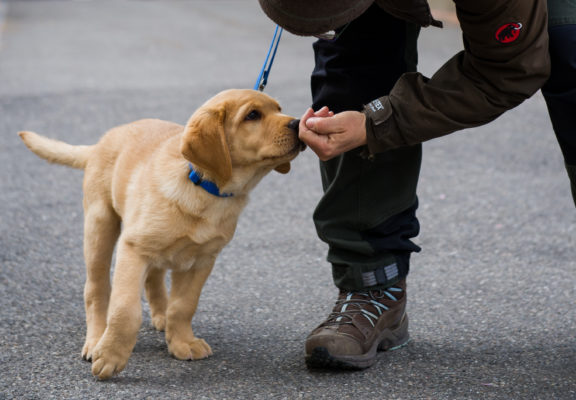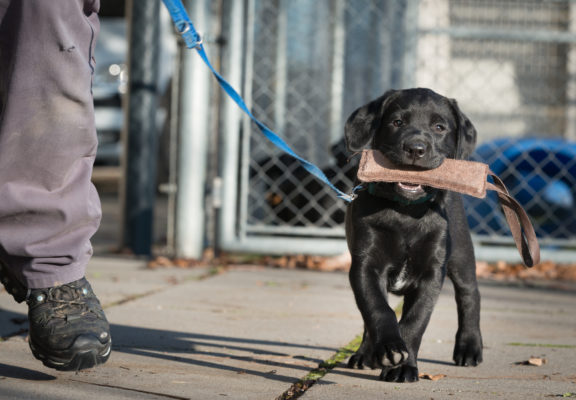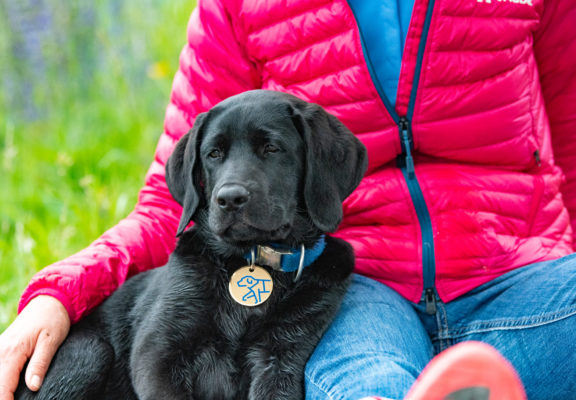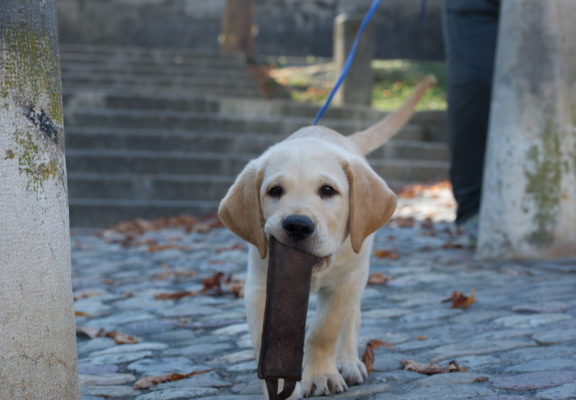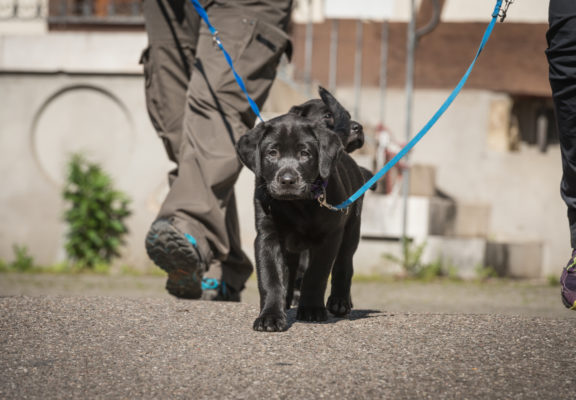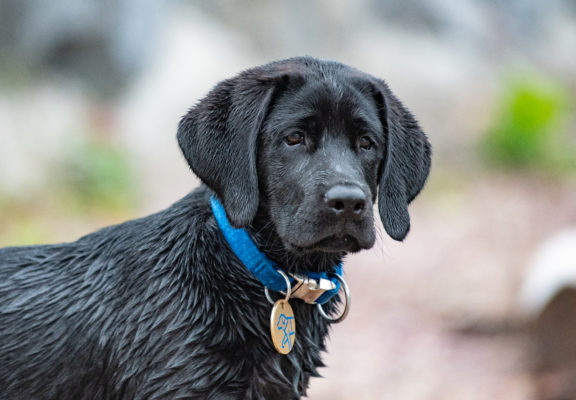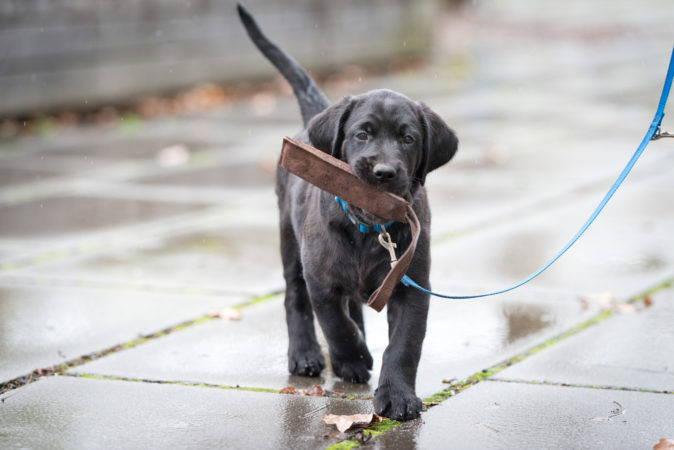
We are constantly looking for dedicated, animal-loving people who raise a ten week old puppy for about one and a half to two years. As a foster carer, you will socialise the puppies, get them used to their environment and teach them basic obedience. By giving the puppies confidence and a sense of security during their early socialisation, the foster families lay the important foundation for their demanding duties as guide dogs. When they return to the school, the dogs are prepared by a trained instructor for their important, valuable service as guide dogs for blind people, assistance dogs, autism service dogs or social support dogs. The school will provide you with support and advice and pays all expenses.
What are the pre-conditions for the allocation of a foster dog?
- Good physical and mental constitution.
- Maximum age at registration: 65 years.
- The main person caring for the dog must be able to provide it with a great deal of time and must be flexible enough to deal with the intensive rearing of a puppy/young dog.
- A willingness to attend regular training days at our school in Allschwil.
- Any children who live within the same household are ideally at least between 5 to 7 years old.
- Pets in general are permitted, a second dog living in the same household will only be allowed by agreement.
- Place of residence: It must be possible taking the dog to a town at least twice or three times a week, to get the dog used to an urban environment.
- The house owner must have given his permission for keeping a dog.
Are you interested in a foster dog? Just get in touch with us and we will be pleased to provide you with more information. You can contact us by phone at +41 61 487 95 95.
Downloads